Home / Academic support
Academic support · Grade R–7

Extra help isn't extra here.
It's how the school works.

At most schools, a child who falls behind gets a note home and a list of tutors. Here, the support is already in the room — quiet, daily, and part of the ordinary timetable. For children who need more than that, we go further.

Sound familiar?

The signs are quiet at first

By the time a gap shows up on a report, it has usually been growing for two terms. These are the things parents tell us they noticed first.

"Homework takes hours now"

Work that should take twenty minutes stretches into a whole evening, with tears at the end of it. That is usually a gap two grades back — not laziness, and not something more hours at the kitchen table will fix.

"They say they understand — then the test comes"

Children get very good at following along in class without really following. In a group of thirty that can go unnoticed for a term. In a group of ours it shows up in a week.

"Maths marks are sliding and I can't tell why"

Grade 4–7 Maths builds straight onto Grade 2–3 foundations. One shaky brick low down and everything above it wobbles — which is why we go looking for the brick, not the symptom.

How it actually works

Nobody gets marched off to the extra-help room

The reason children resist extra help is rarely the work. It is being singled out for it in front of everyone. So we do not do that.

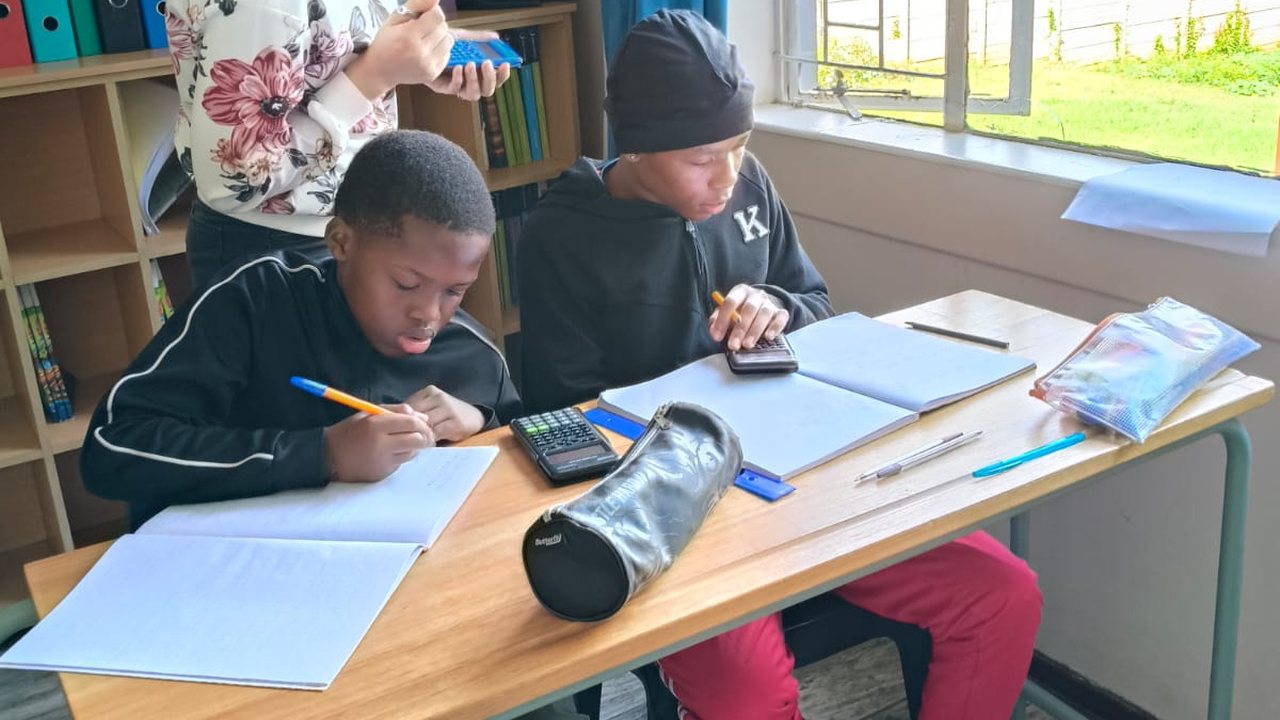
Support at Shine happens inside the normal day, in the same room, from the same adults your child already trusts. A teacher who is working with six children instead of thirty can simply sit down next to the one who has gone quiet — no referral, no timetable change, and nothing for the other children to notice.
  • Built into the school day, not bolted on afterwards
  • Same room, same teachers, no separate "support class"
  • Help arrives when the confusion does, not at report time
  • Confidence protected — that is half the work
A teacher working one-on-one with a learner in a small group at Shine Academy
Where we concentrate

Grade 4 is where school gets serious

Something changes around Grade 4. The Maths stops being counting and starts being abstract. The reading load doubles. Tests begin to count towards something. Children who coasted comfortably through the foundation phase can hit this wall hard — and it is the single most common point at which a parent first thinks something is wrong.

So that is where we put the most focused support: Maths and languages, Grades 4 to 7, tracked week by week. Every grade from R upwards gets support — this is just where it needs to be sharpest.

  • Maths and languages, the two that carry everything else
  • Gaps traced back to where they actually started
  • Test and exam preparation through the term, not the week before
  • Progress reported to you regularly, in plain language
Grade 4 to 7 learners working through Maths at Shine Academy
How far we go

Three levels of support

Every child here gets small groups and individual attention as standard. Some need more than that, and for them we add focused support on top — agreed with you first, and only for as long as they actually need it.

Standard · every child

Everyday support

Part of being at Shine. Nothing to arrange.

  • Small groups, every school day
  • Individual attention as a matter of course
  • Homework guided here, not sent home to you
  • Tests written and supervised on site
Book a visit
Added · individual

Individual support plan

For a child who needs a plan built around them alone.

  • One-on-one attention
  • A personalised learning plan
  • Targeted work on specific gaps
  • Regular parent feedback
  • Everything in focused support
Enquire

Everyday support is simply included. Where a child needs sustained focused or individual support, we agree the level with you after the assessment — so you know exactly what it involves before anything starts, and nothing appears on an invoice you did not expect.

Free · No obligation

Start with a free 20-minute assessment

Before we say a word about places or fees, we find out where your child actually is. Twenty minutes, no cost, no obligation — and you leave knowing their real level in Maths and language and exactly which gaps are holding them back. If we are not the right school for your child, we will tell you that too.

Book it on WhatsApp
  1. We assess your child's Maths and language ability.
  2. We identify the specific gaps — not "weak at Maths", but which concepts.
  3. We explain their current level to you in plain language.
  4. You get clear recommendations, in writing.
  5. We show you what it would take to close them.
What to expect

From first message to settled in

No contracts to decode and no surprises. Here is the whole thing.

1You get in touchWhatsApp or a call
2Free assessment20 minutes, no cost
3We find the gapSpecific, not vague
4You visit the schoolSee the groups yourself
5They start with usSupport from day one
6You see progressFeedback, not guesswork
Before you ask

Questions parents ask us

Will my child be singled out for extra help?
No — and we think this matters more than most schools admit. Support happens inside the ordinary day, in the same room, from the same adults. There is no separate class to be sent to and nothing for the other children to notice. A child who already feels behind does not need an audience for it.
Is extra support an added cost?
Everyday support — small groups, individual attention, homework guided here — is simply part of being at Shine and is included. Where a child needs sustained focused or individual support on top of that, we agree the level with you first so you know exactly what it involves. Nothing ever appears on an invoice you did not expect.
Which grades get academic support?
Every grade, R through 7. The most concentrated support sits in Grades 4 to 7, because that is where the academic pressure steps up sharply and where a gap starts to cost marks.
What actually happens in the free assessment?
About twenty minutes with your child, working through Maths and language tasks pitched at their grade. We are looking for where the understanding runs out. Afterwards we sit with you and explain what we found, what it means and what would fix it. It costs nothing, and you are under no obligation to do anything with it.
My child has been struggling for years. Is it too late?
Almost never. Most of the gaps we find are two or three specific concepts, not a whole missing education — and once they are named, they close faster than parents expect. What takes longer to repair is the belief that they are simply bad at school. That is the part we work on hardest.
How long before we see a difference?
Confidence usually shifts first — often within a few weeks, and you will hear it in how they talk about school. Marks follow later, typically over a term, because they reflect work set before we started. We would rather tell you that honestly than promise a jump by the next test.

Twenty minutes now, or another term of guessing.

The assessment is free, it takes twenty minutes, and you will walk away knowing exactly where your child stands — and what it would take to fix it.

Book a visit